TL;DR: How to protect eavestroughs during Burnaby & Coquitlam winters
To protect eavestroughs from ice dam damage in Burnaby and Coquitlam, keep gutters clear, improve attic insulation and ventilation, and use safe, non-destructive de-icing methods before and during cold snaps.
Most ice dam issues here start with clogged gutters after our long rainy fall. If you clean eavestroughs before the first freeze, fix drainage, and address heat loss from the attic, you’ll prevent 80–90% of ice-related gutter damage.
If you’re already seeing sagging gutters, water staining on soffits, or thick ridges of ice along the roof edge, pause DIY ladder work and book a local, insured exterior cleaning company that follows WorkSafeBC guidelines for winter ladder and roof safety.
Why ice dams are a real problem in Burnaby & Coquitlam
Burnaby and Coquitlam get a tricky mix of rain, wet snow, and freeze–thaw cycles. That’s prime weather for ice dams: ridges of ice that form along the roof edge, trap meltwater, and push it back into shingles and eavestroughs.
In neighbourhoods like North Burnaby, Burke Mountain, and Westwood Plateau, steeper roofs and heavier snowfalls mean more runoff and more stress on gutters when temperatures bounce around zero. Older homes with patchy insulation are especially at risk.
When ice dams form, water can back up under shingles, overflow behind eavestroughs, and leak into soffits and walls. That leads to rotten fascia boards, warped gutters, interior stains, and expensive repairs that most home insurance policies are not eager to cover if maintenance was neglected.
How ice dams damage eavestroughs (in plain language)
Ice dams start when warm air from your home melts snow on the upper roof, but the cold eaves stay frozen. Meltwater runs down, hits the cold edge, and refreezes in your gutters and along the roofline, building a solid ice ridge.
As that ice grows, it gets heavy. Eavestroughs in Burnaby and Coquitlam are often aluminum or steel hung on older fascia boards; a long, solid block of ice can bend hangers, pull screws out, and twist sections out of slope so they never drain properly again.
Meanwhile, trapped water has nowhere to go. It can seep behind the gutter, into soffits, or under shingles. Over a couple of winters, this can turn into rotten wood, moldy insulation, and eavestrough systems that need full replacement instead of a simple tune-up.
Pre-season checklist: prepare your eavestroughs before the first freeze
Start in late October or early November, right after the heavy leaf drop in areas like Central Park, Cariboo Heights, and Mundy Park. The goal is simple: remove anything that can block water before temperatures dip below zero overnight.
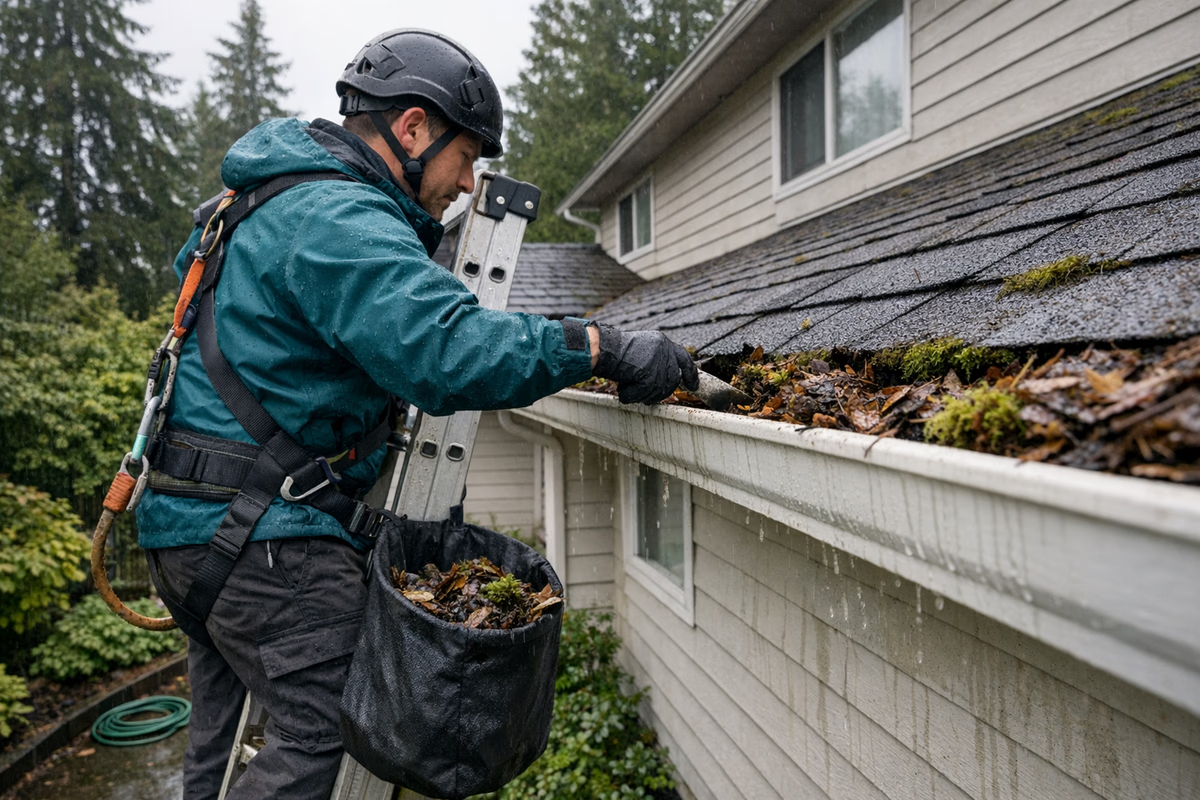
First, clean your eavestroughs thoroughly. Remove leaves, needles, and moss, then flush downspouts with a garden hose to confirm strong flow. Pay special attention to corners and where upper roofs drain onto lower sections, common on Burnaby and Coquitlam split-levels.
Next, inspect slope and attachments. Your gutters should tilt slightly toward each downspout, with no standing water after rinsing. Tighten loose spikes or brackets, replace rusted fasteners, and seal small seam leaks with exterior-grade gutter sealant rated for wet climates.
Step-by-step: how to protect eavestroughs from ice dam damage
Clean gutters and downspouts – Use a stable ladder on level ground, scoop debris into a bucket, and flush with a hose until water runs freely out each downspout.
Check roof and valleys – Clear loose debris from roof valleys and around skylights so meltwater can flow into eavestroughs instead of pooling and freezing.
Improve attic insulation – Add or top up insulation to reduce heat loss; aim for an even layer so no “hot spots” melt snow faster in certain areas.
Increase attic ventilation – Make sure soffit and roof vents are clear; balanced ventilation keeps the roof surface colder and reduces uneven melting.
Install gutter guards or leaf screens – In treed areas like Austin Heights or Deer Lake, quality guards help keep organic debris out, so meltwater can move freely during freeze–thaw cycles.
Consider heat cables strategically – If you have chronic ice issues, use roof-rated heat cables along problem eaves and in gutters, installed per manufacturer instructions and local electrical code.
Redirect downspout discharge – Extend downspouts at least 6 feet away from the foundation, and away from paths where refreezing can create slip hazards.
Schedule a pro inspection – Before the coldest months, have a local exterior cleaning or roofing pro assess your eavestroughs, fascia, and attic ventilation for weak points.
For strata properties in Burnaby Metrotown, Lougheed, or Coquitlam Town Centre, create a simple seasonal checklist for building caretakers. Standardizing fall gutter cleaning and roof inspections across all buildings dramatically reduces winter emergency calls and unit damage claims.
Document each step with photos and dates. This not only helps you track what’s been done; it also supports insurance discussions if a rare, extreme weather event causes damage despite reasonable maintenance.
Pro tips, safety notes, and when to call a local pro
Ladder and roof work in winter is no joke. Wet algae on north-facing roofs in Burnaby Heights or Westwood Plateau can be as slick as ice even above freezing. If you’re not fully confident on ladders, hire a WorkSafeBC-compliant, insured contractor.
Never chip or hammer ice out of your gutters. Metal tools can bend eavestroughs, break seams, and crack hidden sealant. Instead, use calcium chloride-based de-icer socks placed safely from a ladder, or call a pro who uses low-impact de-icing methods.
If you notice interior leaks, sagging gutters, or large, persistent ice ridges, that’s a sign of deeper issues with insulation, ventilation, or drainage. At that point, a coordinated approach between a roofing contractor and a local gutter specialist is the safest and most cost-effective route.
Local FAQs: Burnaby & Coquitlam ice dam and eavestrough questions
How often should I clean gutters in Burnaby and Coquitlam to prevent ice dams?
Most homes need gutter cleaning at least twice a year: once in late spring and once in late fall after leaf drop. In heavily treed areas, three cleanings per year help keep winter meltwater flowing freely.
Do I need heat cables on my gutters in Coquitlam?
Not always. Many homes do fine with clean gutters and good attic insulation. Heat cables make sense on chronic problem areas, like north-facing eaves or complex rooflines, and should be installed to manufacturer specs.
Can ice dams form even if my gutters are clean?
Yes. Clean gutters are critical, but poor attic insulation or blocked ventilation can still cause uneven melting and refreezing along the eaves. That’s why a full roof–attic–gutter approach works best in our climate.
Is it safe to pour salt into my eavestroughs?
Rock salt can damage metal, nearby plants, and some roofing materials. If you must de-ice, use calcium chloride in fabric “socks” placed strategically, or hire a pro who uses controlled, gutter-safe methods.
When should I book gutter cleaning in Burnaby or Coquitlam before winter?
Ideally, schedule between late October and mid-November, after most leaves have fallen but before regular overnight freezes. Stratas should pre-book earlier to secure dates before the first major cold snap hits.
Who handles ice dam prevention for strata buildings?
Typically, the strata council or property manager coordinates with exterior cleaning and roofing contractors. Owners should report early signs of ice dams so the strata can act before damage spreads to multiple units.
Local help for winter-ready eavestroughs in Burnaby & Coquitlam
If you’d like, we can handle the messy, high-ladder work for you. Our local crews service Burnaby and Coquitlam, from Brentwood and South Slope to Maillardville and Burke Mountain, with fall gutter cleaning and winter ice dam prevention packages.
We’re fully insured, follow WorkSafeBC safety standards, and document every job with before-and-after photos you can share with insurers or strata councils. We also provide written recommendations for insulation, ventilation, and minor eavestrough repairs.
Call us today at (604) 555-0134 or visit our Google Business Profile to book service. Our main office (NAP-consistent): RainReady Exteriors, 1234 Kingsway, Burnaby, BC V5H 2A2. Service area: Burnaby, Coquitlam, New Westminster, and nearby Lower Mainland communities.